Updated: September 2026
Moving to London means getting to grips with the Tube, buses, Overground and Elizabeth line. It can look complicated when you first arrive, but you’ll get the hang of it surprisingly quickly.
For most journeys, you simply tap in and out using the same contactless card, phone or Oyster card. The bigger question for students is which option will save you the most money.
Here’s what you need to know.
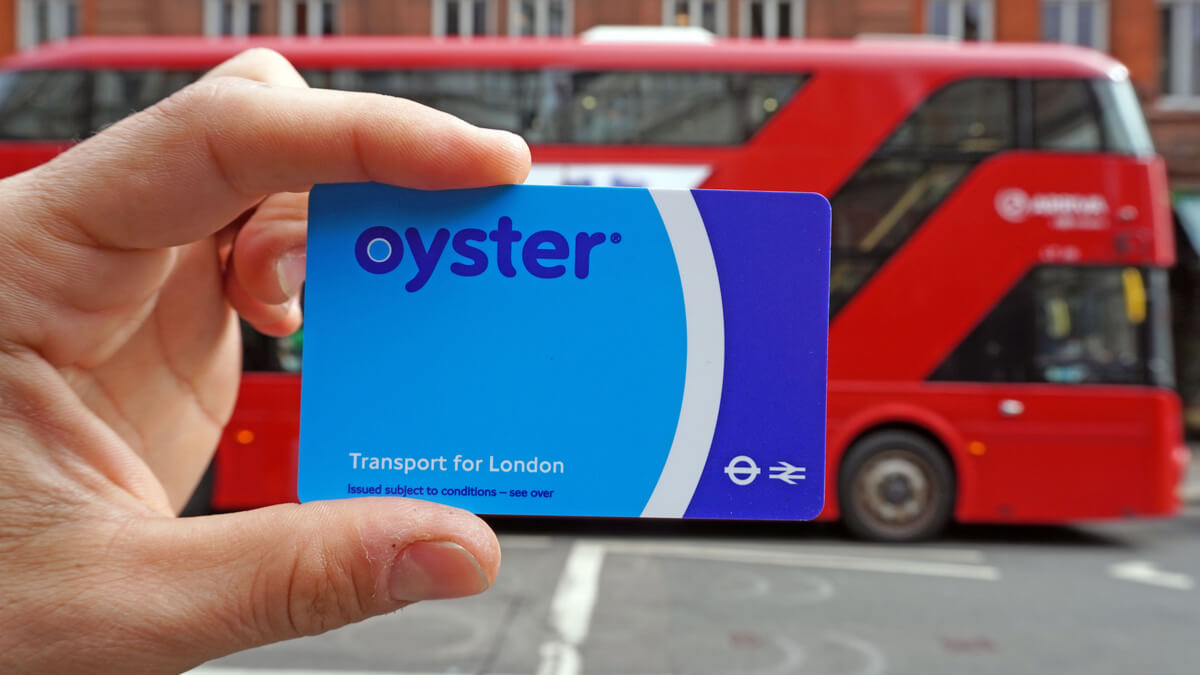
Should students use Oyster or contactless in London?
For everyday travel, you can use:
- A contactless debit or credit card
- Apple Pay or Google Pay
- An Oyster card
On the Tube, Elizabeth line, DLR and London Overground, you tap in at the start and tap out at the end of your journey.
On London buses and trams, you only need to tap when you get on.
The important bit is to use the same card or device for your whole journey. If you tap in with your physical bank card and out using the same card through your phone, the system can treat them as different payment methods.

Can students get cheaper travel in London?
Yes, and this is where it’s worth spending five minutes working out what you’re eligible for.
Eligible students can apply for an 18+ Student Oyster photocard, which gives you 30% off adult-rate Travelcards and Bus & Tram Pass season tickets.
One important thing to know: the 18+ Student Oyster discount doesn’t automatically give you 30% off normal pay-as-you-go fares.
So whether it saves you money will depend on how often you travel and the type of journeys you make.

What about a 16–25 Railcard?
This is another discount worth knowing about.
If you’re eligible for a 16–25 Railcard, you can ask a member of staff to add it to an Oyster card.
Once linked, it can give you 1/3 off eligible off-peak pay-as-you-go fares and off-peak daily caps on services including the Tube, DLR, London Overground, Elizabeth line and some National Rail journeys.
That can be particularly useful if you don’t need to travel into university at peak time every day.

Download Citymapper before you arrive
Google Maps is useful, but Citymapper is one of the apps we’d recommend having on your phone before you arrive in London.
Put in where you want to go and it compares different routes, including Tube, train, bus and walking.
It also helps you work out which station exit to use, which can save you emerging from a huge London station and discovering you’re suddenly walking in completely the wrong direction.

Often walking really is quicker
One of the first things you learn about London is that Tube stations that look miles apart on the map can actually be surprisingly close together.
Before automatically heading underground, check the walking time.
You’ll save money, get to know your local area and quite often discover a café, park, shop or shortcut you’d never have found from the Tube.

And often the bus is better
The Tube gets most of the attention, but don’t ignore London buses.
For shorter journeys they can be really convenient, and unlike the Tube, you actually get to see London while you travel through it.
If you’re new to the city, sitting upstairs is also a pretty good way to start understanding how different neighbourhoods connect.

What about cycling in London?
Cycling is another great option for shorter journeys, particularly once you know your way around your local area.
You can rent electric bikes in London using Lime, Forest or Santander Cycles if you don’t have your own bike.
Remember, YourTRIBE properties have bike storage if you fancy having your own bike.

London Travel Tips
Stand on the right
On escalators, stand on the right and walk on the left.
You’ll understand why we’re telling you this approximately 30 seconds after arriving at a busy Tube station.
Let people off first
Whether it’s a train, Tube or bus, let people get off before you try to get on.
Have your payment ready
Don’t arrive at the barrier and then start searching through your bag.
Check the last journey home
London runs late, but not every Tube or train service runs all night. Check your journey before a night out rather than assuming you’ll be able to get home the same way you arrived.
Save your accommodation in your maps
It sounds obvious, but when you’ve just moved to a new city, having your exact address saved in your phone makes getting home much easier.
Try a different route occasionally
London starts to make much more sense when you stop travelling everywhere underground.
Walk, get a bus or explore somewhere new. Before long, the enormous city you arrived in starts to feel much smaller.

Getting around from YourTRIBE
One of the advantages of living in London is having an enormous amount happening around you.
YourTRIBE has properties across Elephant & Castle, Southwark, South Bermondsey and Deptford, giving residents access to different parts of south and central London.
Your property Welcome Guide includes useful information about your building and local area, so it’s worth keeping it handy when you first arrive.
Click to download your Welcome Guide here:
YourTRIBE Elephant & Castle Welcome Guide
YourTRIBE Southwark Welcome Guide
YourTRIBE South Bermondsey Welcome Guide
YourTRIBE Deptford Welcome Guide