
You might arrive in London expecting friendships to happen quickly: flatmates becoming instant best friends, freshers’ events turning into group chats, someone knocking on your door on the first night. Sometimes that happens. More often, it’s slower than that.
How Friendships Actually Form at University
There’s a version of making friends at university that looks like a film montage: instant chemistry, brilliant conversations, a group that gels from day one. That version exists occasionally. The more common version is quieter and slower, and honestly more durable.
Most lasting friendships form through proximity and repetition. Seeing the same person at the same time, in a low-stakes context, enough times that talking starts to feel natural. Making coffee at the same time every morning. Seeing the same faces at the gym. Walking to an event with someone from your floor because it was easier than going alone.
Consistency matters more than confidence. You don’t need the perfect opener, you need to keep showing up in the same places.
This is reassuring once you internalise it, because it means making friends isn’t about being the most interesting person in the room. It’s mostly about being around, being approachable, and giving it time.
Why Organised Events Matter More Than You’d Think
Nobody particularly loves the phrase “organised fun.” It carries a faint smell of enforced team bonding and awkward name games. But events (when done well), serve a very specific and genuinely useful purpose: they remove the pressure of having to start something from scratch.
When you’re at a shared activity, the agenda is already set. “What did you think of that?” needs no courage to ask. And the second event is always easier than the first, because you’ve already met. What a good event actually provides is a context that makes interaction feel normal rather than effortful. You’re not approaching a stranger cold, you’re just talking to someone you happen to be standing next to at a thing you both chose to attend.
That sounds small, but it can be the difference between going back to your room and staying out for another conversation. It’s often the difference between a week where you meet nobody new and a week where you meet three people you genuinely like.








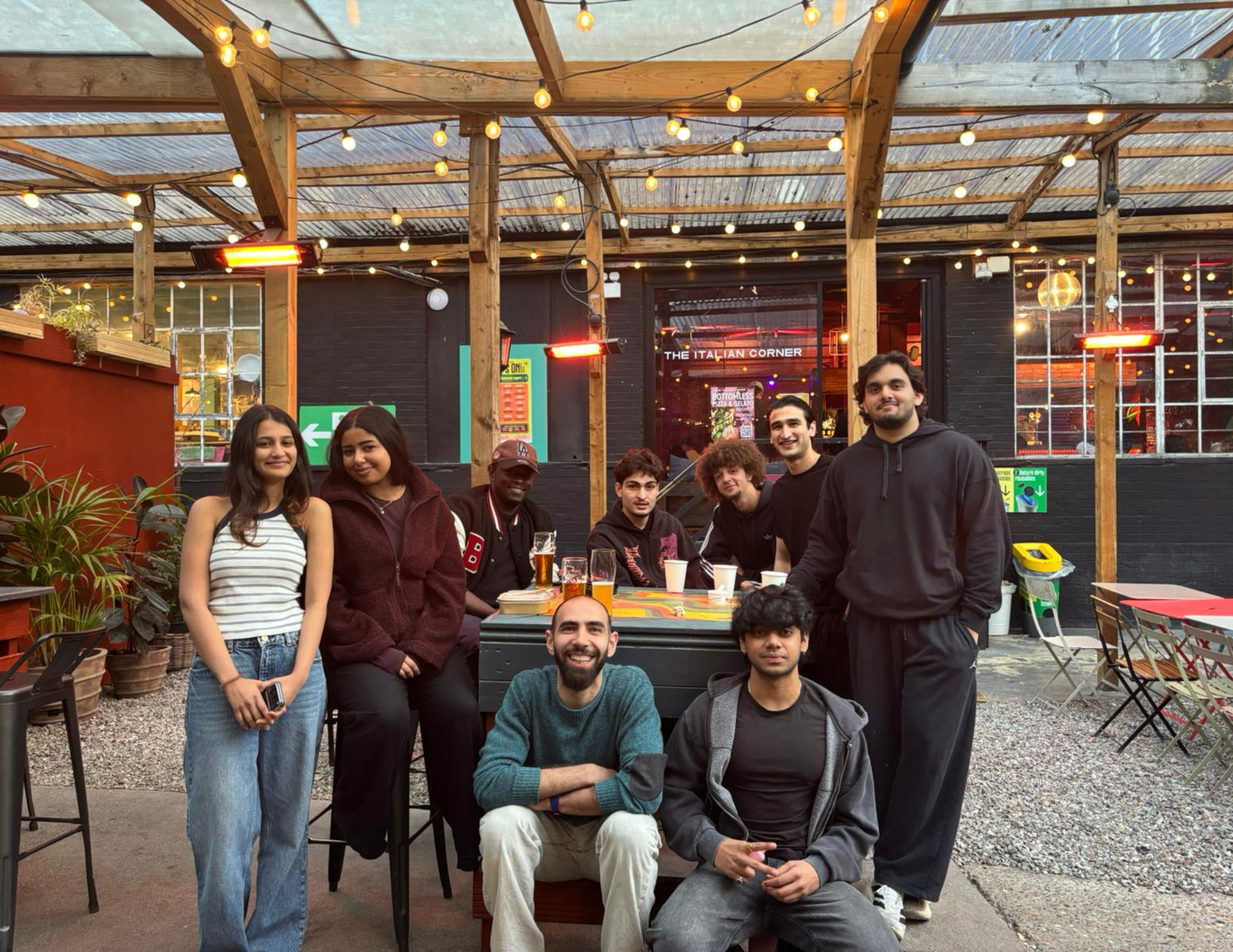
Your living setup shapes your social life, more than location does.
You can be in the middle of one of the world’s most populated cities and still feel completely isolated. London is full of students who live this way – technically surrounded by people, practically quite alone, and the most common reason is their accommodation.
Some buildings aren’t designed for connection. They’re designed for containment: a private room, a bathroom, a locked door. There’s nothing wrong with privacy. But when there’s no shared space, no natural gathering point, no reason to leave your room and encounter another human being, social life becomes something you have to manufacture entirely yourself. That takes energy most people don’t consistently have.
A setup that makes friendship harder
- Large anonymous buildings
- Rooms with no reason to leave
- No communal energy or rhythm
- A home that makes friendship easier
- Events designed for everyone, you choose what you’d like us to host, so you meet your people
- Lounges people actually use
- Rooftops that become evening spots
The physical design of where you live either creates or removes the conditions in which friendships naturally form. That’s not a minor consideration, it’s often the single biggest factor in whether your first year feels socially rich or quietly lonely.





Most people are feeling exactly the same as you.
This is the part that’s hardest to believe in the first few weeks, but it’s one of the most reliably true things about starting university in a new city.
The person who walked into the kitchen looking comfortable and said something funny and seemed like they already knew everyone? They moved in two weeks before you feeling precisely the same way you do right now. They’d just had a bit more time to build the performance of confidence that everyone constructs in new social situations.
Almost nobody arrives and immediately finds their people. Almost everybody goes through a period of surface-level conversations and slightly forced laughter and evenings where they wonder if they made the right choice. That period passes — usually faster than it feels like it will — and it passes not through a sudden burst of social courage but through the steady accumulation of ordinary, unremarkable moments shared with the people around you.
You don’t need to be more outgoing. You just need to keep showing up… in the kitchen, in the lounge, at the event you almost didn’t go to… and let ordinary time do most of the work.
The friendships are already in the building. They just need a little time and the right conditions to find their way to you.
Built for finding your people.
At YourTRIBE, this is why the social spaces matter as much as the bedrooms: they give people somewhere easy to be before they know each other well.
Frequently Asked Questions
-
For most students, the first real friendships start to form between weeks three and six, after the initial freshers buzz has settled and daily routines have established themselves. The students who find it hardest are often those waiting for a big moment rather than making the most of small, repeated ones. Proximity and consistency matter far more than timing.
-
Yes, and in some ways the conditions are well-suited to introversion. The friendships that last tend to form through low-pressure repetition rather than high-energy social performance, shared kitchens, quiet evenings in common areas, walking to the same lecture. You don’t need to be the loudest person in the room. You need to be around, and to stay open to the slow build.
-
It can feel that way. London is large and anonymous, and many students underestimate how isolating it can be without the right setup. The students who thrive socially in London tend to have one thing in common: accommodation that creates natural social conditions, rather than leaving them to build a social life from scratch in a city that won’t do it for them.
-
Shared kitchens, communal lounges, smaller flat configurations, and a regular programme of events are the most reliable indicators. Buildings that feel like communities rather than just places to sleep make a genuine difference to how your year unfolds. What to look for in student accommodation in London
-
Freshers’ Week can be fun, but it is not the deadline for making friends. Most real friendships form afterwards, once routines begin and people stop trying so hard to seem confident. The students who feel most at home by Christmas are often not the ones who had the best Freshers’ Week. They’re the ones who kept showing up after it ended.